×

For premium consumer brands, the shelf is where the sale is won or lost. In grocery and garden retail, most purchase decisions are made in front of the shelf in a matter of seconds — shoppers scan, compare and choose without a salesperson present. Packaging is the brand’s only representative at that moment. A package that cannot stand, cannot be seen and cannot be read loses the shopper before the product is even picked up.
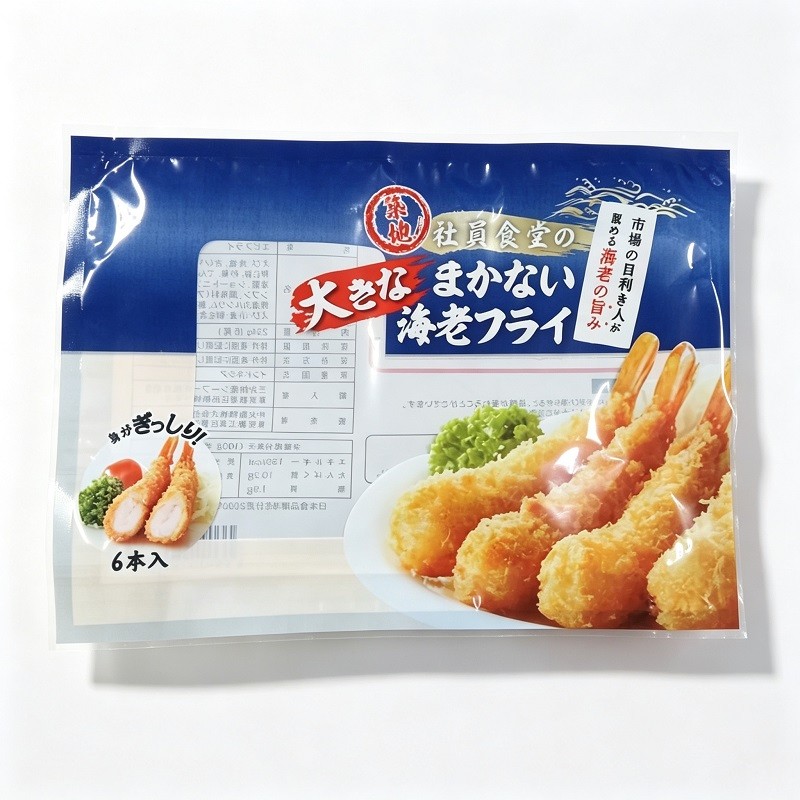
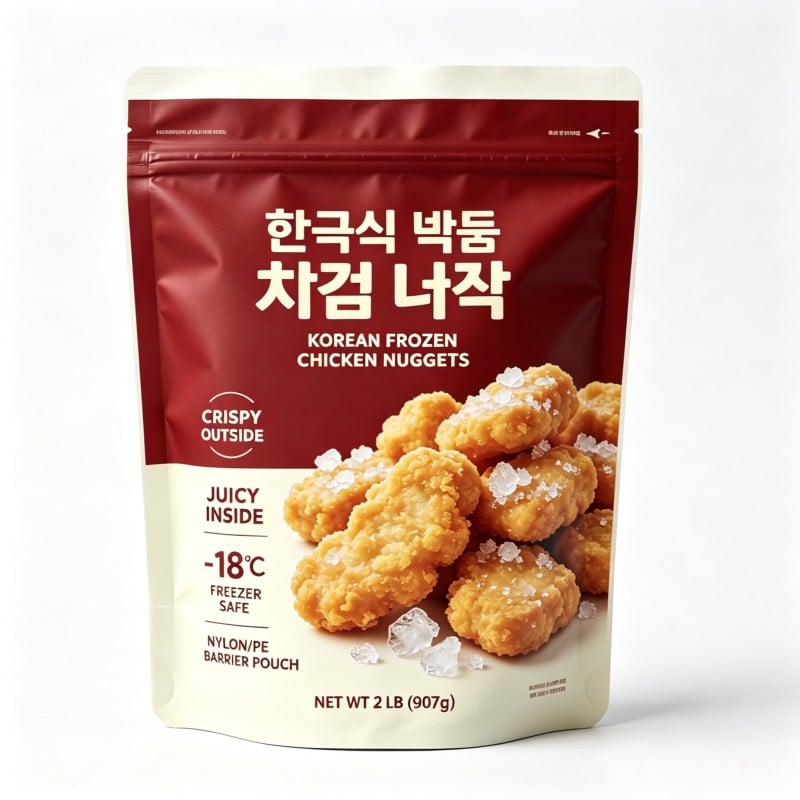
Premium categories — from specialty foods and home-and-garden products to pet care and household consumables — are growing fast in North American and European retail, and with growth comes competition. Brands fight for eye level, for front-facing slots and for the extra seconds of shopper attention that turn a look into a purchase. Retailers think in facings and shelf seconds: a product that stands up straight, shows a clean front panel and stays in place earns more facing, more time and more repeat sales. Yet for years, flexible-packaging brands faced an awkward trade-off: standard pouches were lightweight and economical but collapsed, toppled and looked cheap on shelf; rigid cartons displayed beautifully but cost more, weighed more, and consumed more storage and freight capacity. The flat-bottom box pouch was engineered to end that trade-off — and in this case, it did so with measurable results.
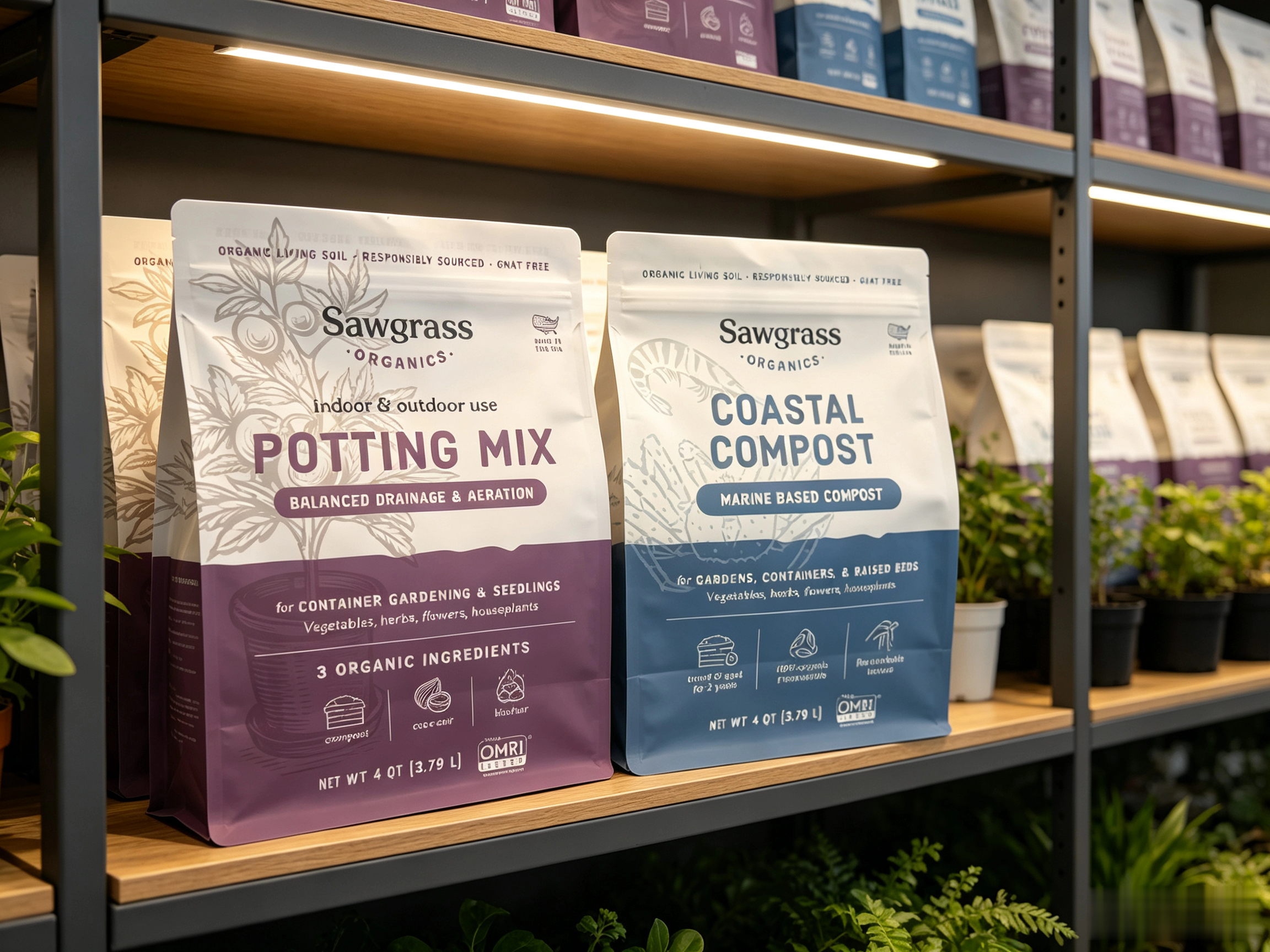
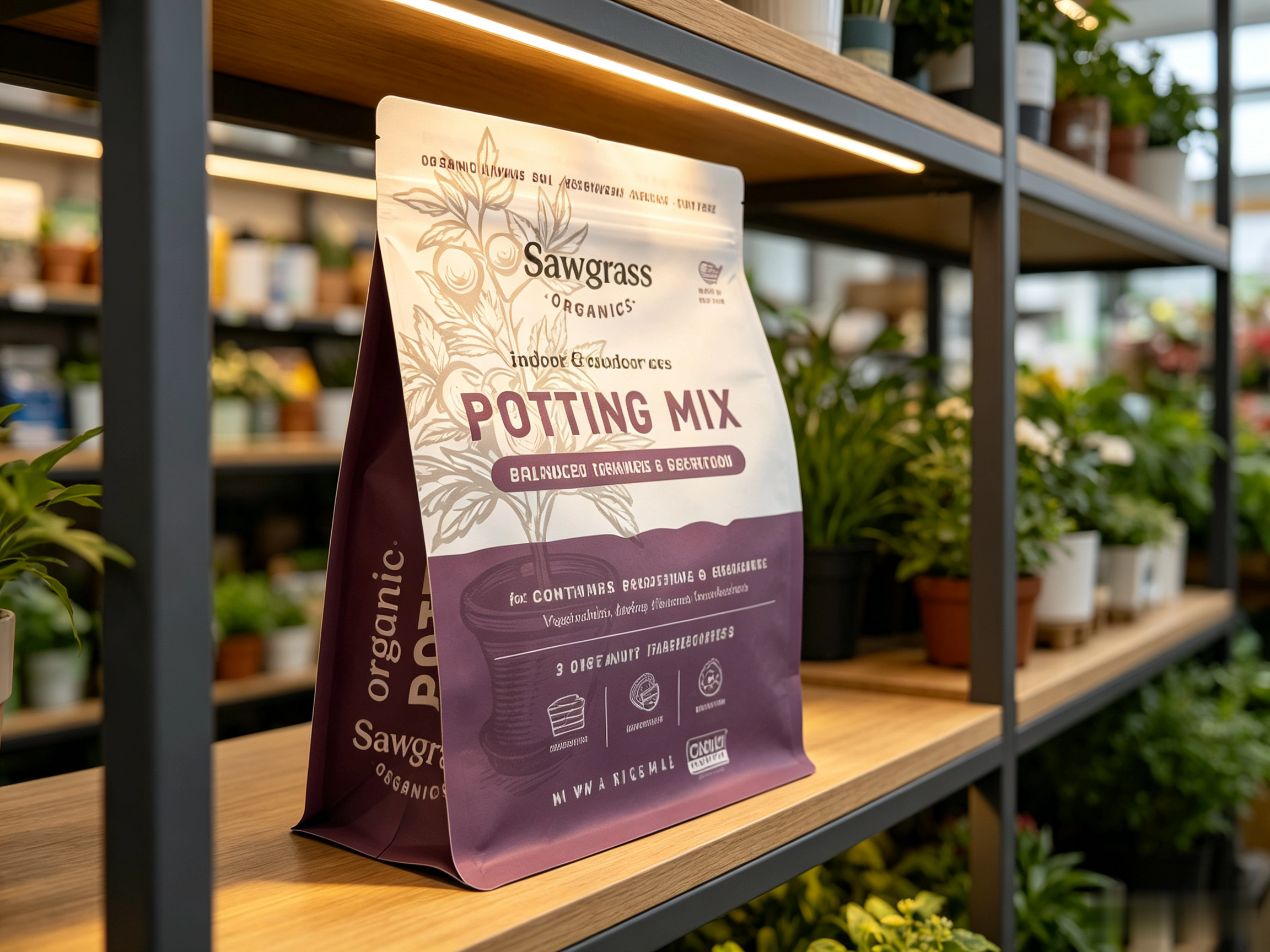
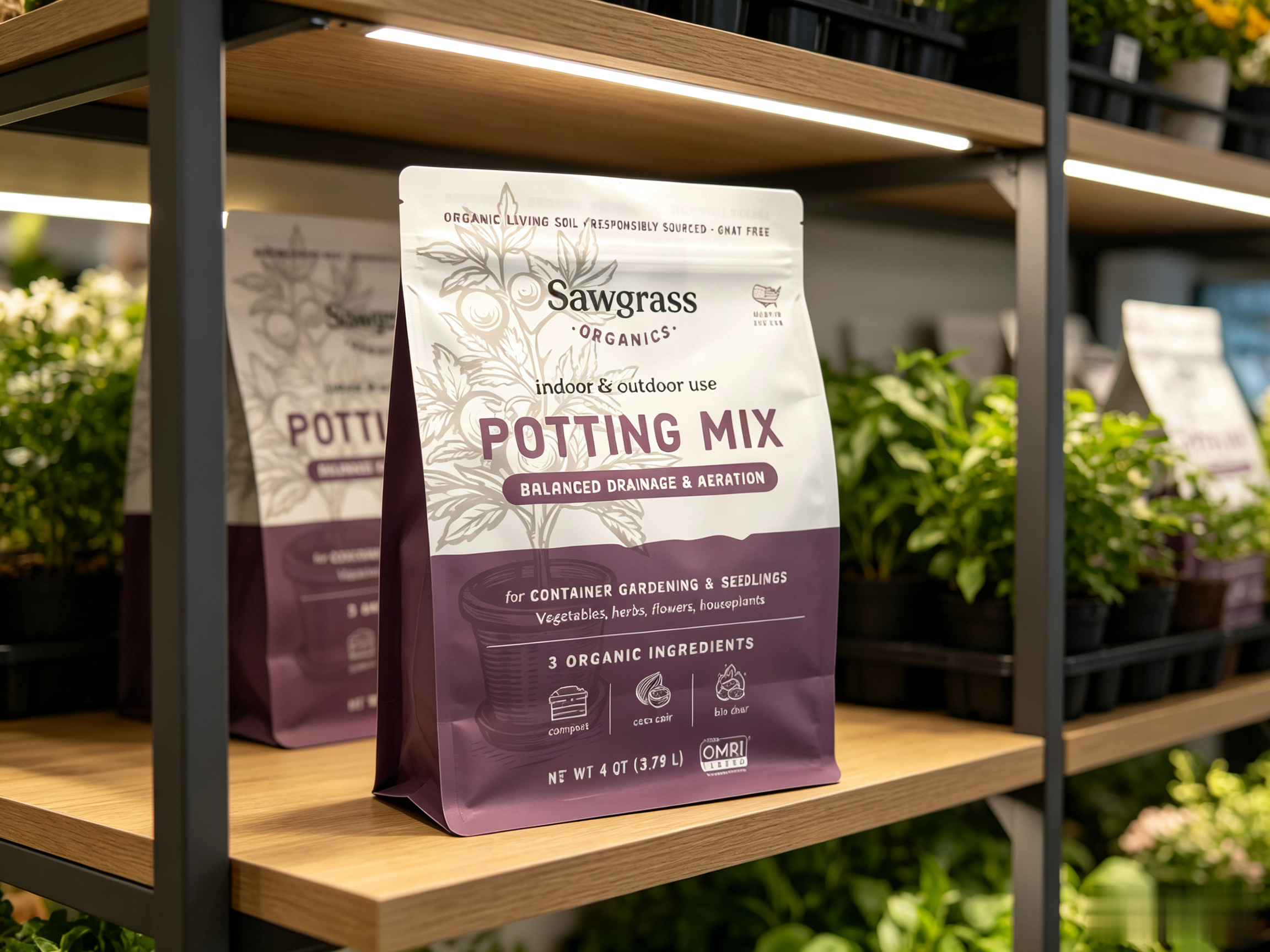
Our client is Sawgrass Organics, an American brand of premium potting mix and organic living soil for container gardening. Made in the USA, the Sawgrass Organics line is positioned as responsibly sourced, gnat-free organic living soil for indoor and outdoor use, with balanced drainage and aeration, and three organic ingredients made for vegetables, herbs, flowers and houseplants. The brand’s natural, premium positioning earned it shelf space with garden centers and home-improvement retailers — but the stand-up pouch it was selling in could not keep up. Printed on a narrow front panel, the bag collapsed and toppled beside rigid soil bags and bulk bins, and the client knew exactly what that was costing at the garden center.
The client came to us with four specific, quantified problems:
The conclusion was uncomfortable but clear: a premium product was being sold in packaging that undermined it at the exact moment of decision.
We redesigned the packaging around a flat-bottom (box) pouch — a flexible format engineered to behave like a rigid box on shelf while keeping the cost, weight and logistics advantages of a pouch.
What makes it work:
The format is also scalable across a range. From small starter bags to large family and garden sizes, the same pouch geometry can be produced in one production run family — giving the brand a coherent shelf block instead of a patchwork of different shapes. And because every face of the pouch can carry print, the format works as a 360-degree display: on the shelf, on the peg, in the garden shed and in the social-media photo the customer posts after opening.
Typical layer architecture:
Layer |
Material |
Thickness |
Role |
Outer |
PET |
12 µm |
Print surface, premium feel |
Inner |
White PE |
128 µm |
Opaque white film, hermetic seal, stiffness |
Compared with rigid cartons, the box pouch delivers measurable logistics advantages: roughly 60–70% lower shipping weight, flat-packed storage, and no separate display carton or divider — a meaningful cut in material use and cost per unit.
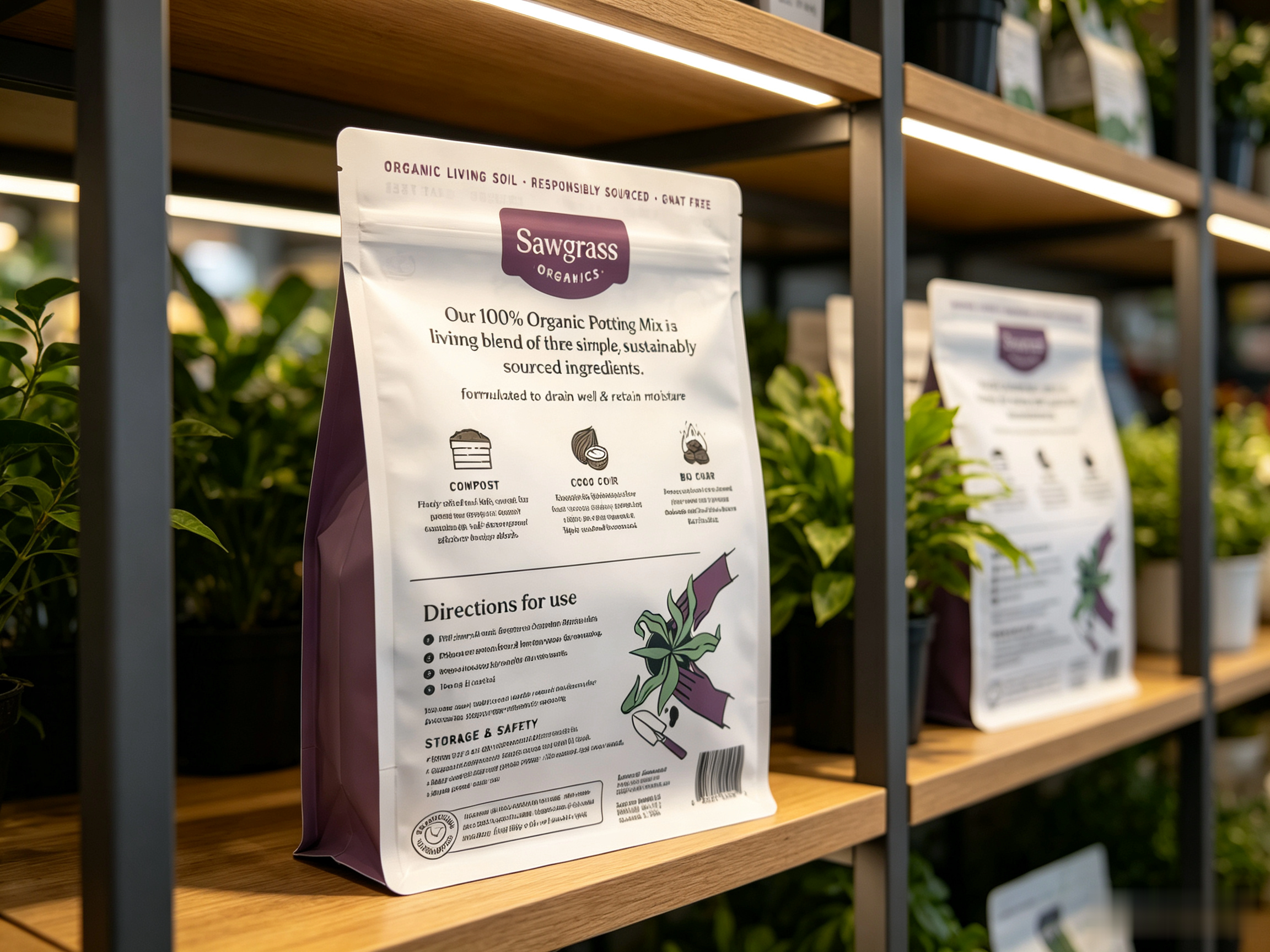
The change was validated across three seasons and six retail chains. Before the first production run, we produced pre-production samples and ran the full check-list: bottom gusset forming on our own bag-making line, seal strength, drop testing on a fully loaded pouch, and a real-world transit simulation with the client’s distribution partner. Only after the samples passed did the client commit to scale-up. The before/after comparison below reflects the same product, same price point and same distribution route — only the packaging changed.
Metric |
Before (stand-up pouch) |
After (box pouch) |
Retail listing acceptance |
2 chains declined |
6 new chains listed in 6 months |
Display stability |
Collapsed / toppled |
Stable, self-standing |
Shelf placement |
Below eye level |
Eye level, front-facing |
Front display area |
Narrow |
Full billboard panel |
Transit damage returns |
Recurring |
Near zero |
Retailer reorders |
Slow rotation |
Steady repeat orders |
The most telling number was the one the client watched first: listings. Where the brand had been declined, buyers now asked for the product by name — and the flat-bottom format itself became a talking point in retail meetings.
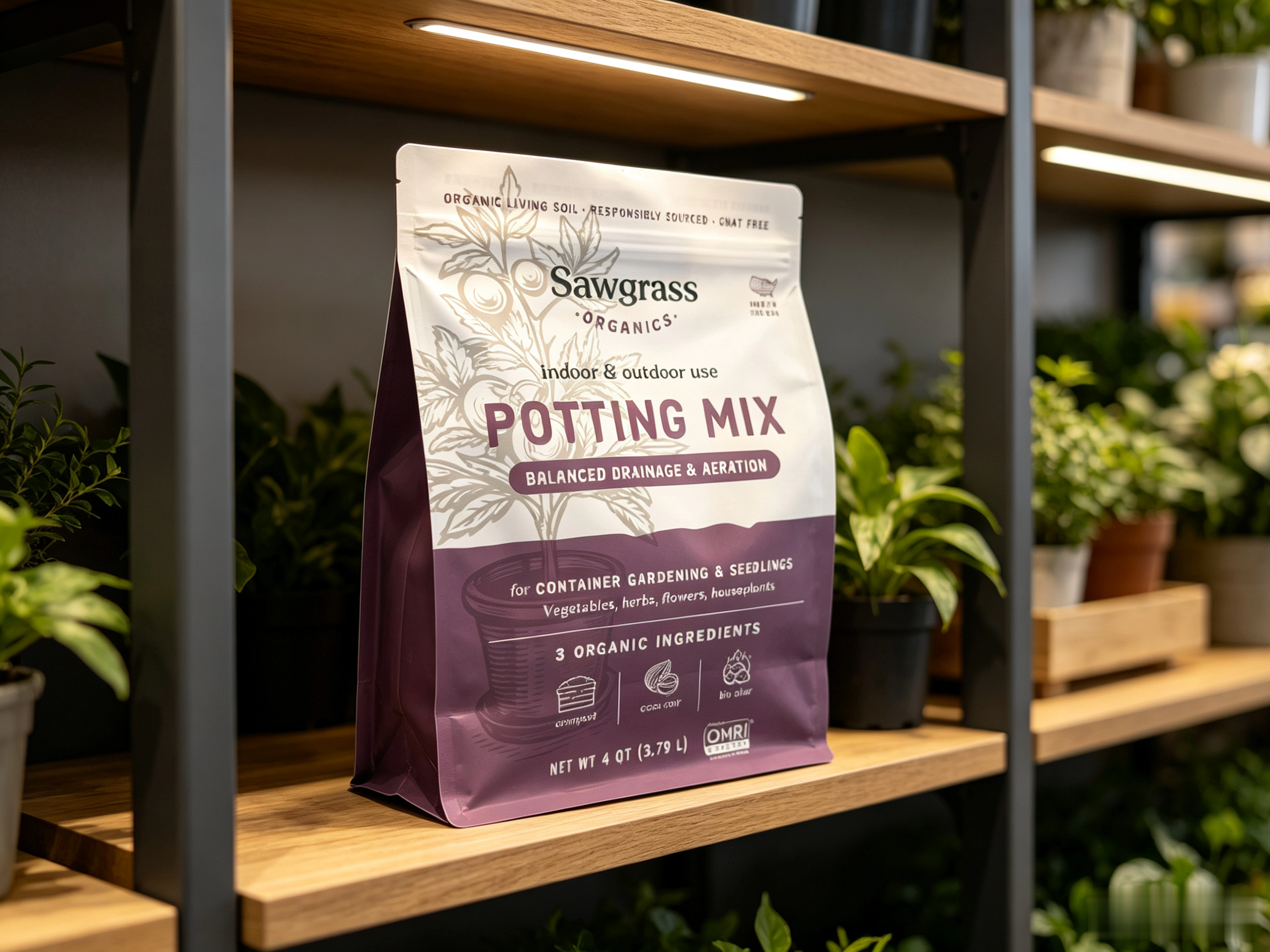
For this client, the box pouch did more than fix a display problem. It gave the brand a format that matched its premium positioning — a package that stood as proudly as the product performed, displayed at eye level, and told the organic, clean-label story at full size. Merchandising became easier for store staff, which bought goodwill with retailers; the stable, square format stacked better in the garden shed and garage, which bought loyalty with customers; and the format photographed beautifully, which bought reach on social media. It also aligned with the brand’s sustainability story: less material than a rigid box, no secondary display carton, and more product shipped per pallet. Packaging that sells is the cheapest marketing a brand can buy.
If your product deserves to be seen, it deserves a format that stands up for it. Send us your product, your retail targets and your display goals — we will recommend the right structure and finish, produce samples, and run the stability and logistics checks before you commit.
Why Haodong Packaging:
Contact our packaging engineers today — samples, testing and a quote within days. Let’s make your packaging the strongest part of your product.

 EN