
 EN


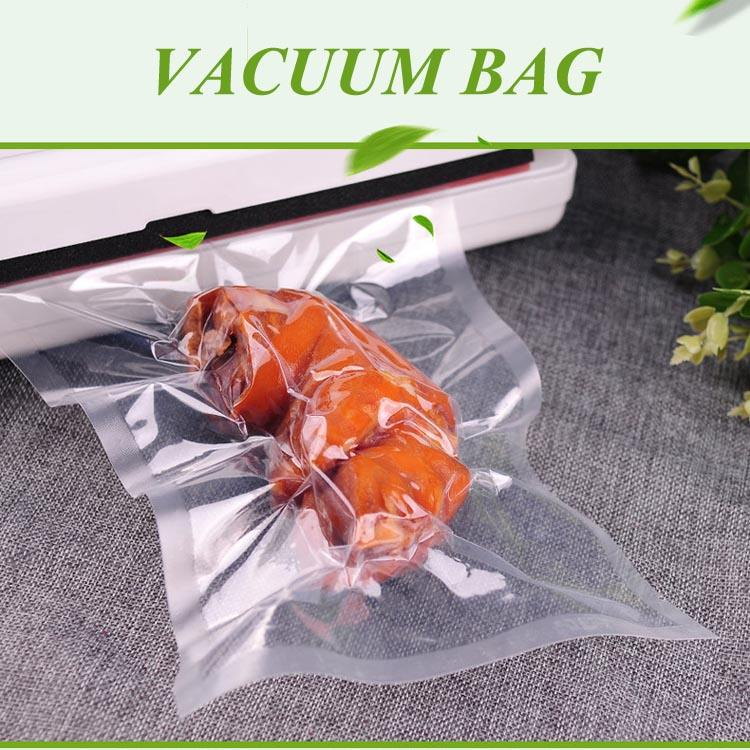
Understanding the correct specifications for a food-grade three-side seal vacuum bag is essential for manufacturers, distributors, and businesses seeking reliable food preservation solutions. A vacuum bag represents a critical component in modern food packaging, designed to extend shelf life while maintaining product quality and safety. The three-side seal design is particularly popular in the food industry because it combines efficient production with practical usability, offering a balance between cost-effectiveness and performance. When selecting or manufacturing a vacuum bag for food applications, knowing the precise standards and technical requirements ensures compliance with food safety regulations and customer satisfaction.

The three-side seal vacuum bag configuration features sealed edges on three sides with an open edge for product filling, making it an ideal choice for frozen foods, snacks, and specialty products. Proper specification of a vacuum bag ensures that the seal integrity remains intact throughout storage, shipping, and handling. This article explores the key specifications, material standards, seal performance requirements, and quality criteria that define a professional-grade food-safe vacuum bag for commercial and industrial applications.
Material Composition Standards for Food-Grade Vacuum Bags
Approved Resin Types and Layering Structure
A vacuum bag intended for food contact must be manufactured from approved food-grade resins that meet strict regulatory guidelines. The most common materials used in a vacuum bag are polyethylene (PE), polypropylene (PP), and polyamide (PA), often layered together to achieve optimal barrier and seal properties. A three-layer vacuum bag typically combines PA for puncture resistance, PE for sealability, and additional PE or PP for cost efficiency. Multi-layer construction in a vacuum bag provides superior oxygen barrier performance, moisture resistance, and mechanical strength compared to single-layer alternatives. Food-grade resins must comply with FDA CFR Title 21 regulations in North America and equivalent standards such as EU Regulation 10/2011 in Europe.
Barrier Properties and Oxygen Transmission Rates
The barrier performance of a vacuum bag directly determines how long the packaged product remains fresh and protected from oxidation. Oxygen transmission rate (OTR) is a critical specification for a vacuum bag used in frozen food or snack packaging, typically measured in cubic centimeters per square meter per day (cc/m²/day). High-quality vacuum bag designs incorporate PA layers that achieve OTR values below 10 cc/m²/day, ensuring extended shelf life for oxygen-sensitive products. Water vapor transmission rate (WVTR) is equally important for a vacuum bag, especially in humid environments, with specifications typically targeting values below 5 grams per square meter per day (g/m²/day). These barrier properties are non-negotiable when selecting a vacuum bag for commercial food preservation applications.
Seal Strength and Performance Specifications
Seal Quality Requirements and Testing Standards
The seal integrity of a vacuum bag determines whether the package will maintain its protective barrier throughout the product's shelf life. Food-grade vacuum bag specifications require minimum seal strength values, typically measured in the range of 3–5 kg per 15 mm of sealing width according to ASTM F88 or equivalent international standards. A properly designed vacuum bag must achieve consistent seal strength across all three sealed edges, with acceptable variance limits of no more than 10 percent. Heat seal temperature range for a vacuum bag is typically between 160–180 degrees Celsius for PE-based seals, though specific requirements depend on the exact resin formulation. Peel tests and tensile strength measurements confirm that a vacuum bag maintains structural integrity when subjected to normal handling stress.
Thermal Seal Stability and Low-Temperature Performance
A vacuum bag used for frozen products must maintain seal flexibility and strength even at sub-zero temperatures, a performance criterion often overlooked in standard specifications. The sealing film in a vacuum bag should exhibit minimal brittleness at minus 18 degrees Celsius or lower, ensuring the seal does not crack or fail during storage. Thermal cycling tests, where a vacuum bag is repeatedly exposed to temperature fluctuations, validate long-term seal durability in real-world warehouse and retail conditions. The specification for a vacuum bag should include low-temperature seal strength data, confirming that the seal maintains at least 80 percent of its room-temperature strength when frozen. This becomes especially critical for seafood, fried snacks, and other frozen product categories where temperature stress is inevitable.
Structural Dimensions and Design Specifications
Thickness Tolerances and Layer Configuration
The thickness of a vacuum bag directly impacts both its protective capability and production cost, making it a carefully controlled specification in food packaging. Standard vacuum bag thickness ranges from 60 to 120 microns for most food applications, with specific requirements depending on product type and shelf-life target. A three-layer vacuum bag typically allocates thickness as follows: PA layer for puncture resistance (20–30 microns), intermediate PE or PP layer (20–40 microns), and inner seal layer (15–30 microns), with total thickness tolerance of plus or minus 5 percent. Thickness variation within a single roll of vacuum bag material must remain within strict limits to ensure consistent seal quality and barrier performance. Regular calibration of extrusion equipment and quality monitoring systems ensures that every vacuum bag meets thickness specifications throughout production.
Dimensional Specifications and Sealing Zone Width
The three-side seal configuration of a vacuum bag requires precise dimensional specifications to ensure efficient filling and reliable seal formation. Standard sealing zone width for a vacuum bag is typically 10–15 millimeters on each sealed edge, providing adequate contact area while minimizing heat damage to the product. A vacuum bag designed for high-speed automated machinery must have consistent width and length tolerances of plus or minus 2 millimeters to prevent jamming or misalignment. The open edge of a vacuum bag (typically the top) should be precisely dimensioned to fit filling equipment and allow adequate access for product insertion. Custom dimensional specifications for a vacuum bag can be accommodated by experienced manufacturers familiar with industrial filling equipment requirements.
FAQ
What makes a vacuum bag food-grade compliant?
A vacuum bag is considered food-grade compliant when manufactured from FDA-approved resins, free from harmful additives, and tested to confirm it meets all relevant food contact safety standards. The manufacturing process for a food-grade vacuum bag must include documentation of material sourcing, batch testing, and compliance certificates from recognized regulatory bodies. A properly certified vacuum bag will have traceability records and third-party testing reports confirming its safety for direct food contact across all intended storage conditions.
How does a three-side seal vacuum bag differ from other seal designs?
A three-side seal vacuum bag features sealed edges on three sides with an open top edge for product filling, making it simpler to manufacture and faster to fill compared to four-side seal or gusseted designs. This configuration of a vacuum bag reduces production costs while maintaining excellent seal integrity and barrier performance for most food applications. A vacuum bag with three-side sealing is particularly suited for high-volume production of frozen foods, snacks, and portion-controlled products where efficiency is prioritized.
What testing should be performed on a vacuum bag before commercial production?
A vacuum bag should undergo comprehensive testing including seal strength verification, oxygen and moisture transmission rate measurement, puncture resistance evaluation, and thermal cycling tests to confirm long-term durability. A new vacuum bag design should also be tested for compatibility with specific filling and sealing equipment, ensuring that the bag feeds smoothly and achieves consistent seal quality at production speeds. Samples of any production vacuum bag must pass regular quality audits including visual inspection for defects, thickness measurement, and random seal strength verification to maintain consistency and compliance throughout the manufacturing run.